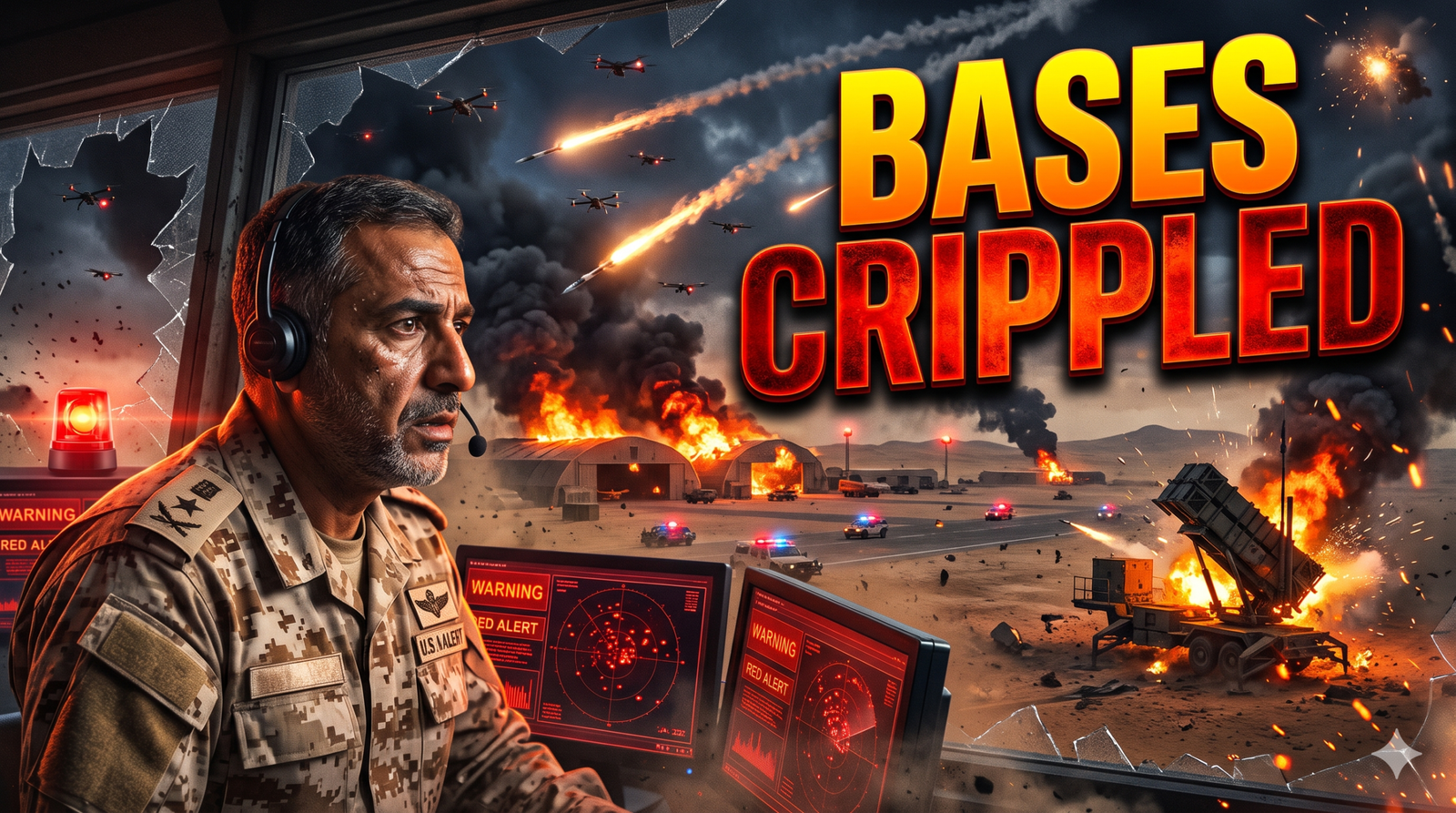
In analyzing the dramatic escalation of asymmetric strikes targeting Saudi military installations, the confrontation between Yemen’s Houthi movement (Ansar Allah) and the leadership of Crown Prince Mohammed bin Salman (MBS) illustrates how low-cost, long-range aerial warfare has fundamentally challenged conventional military superiority in the Gulf. Over the course of the protracted conflict along the Arabian Peninsula’s southern rim, waves of precision-guided loitering munitions, cruise missiles, and ballistic salvos have repeatedly probed, bypassed, and overwhelmed heavily fortified air bases, border garrisons, and critical logistics nodes.
This sustained campaign of asymmetric strikes has exposed the strategic vulnerabilities of high-tech standing militaries, shaken the security guarantees underpinning Riyadh’s economic modernization agenda, and reshaped the geopolitical calculus across the Middle East.
The Architecture of the Strike: Asymmetric Saturation
The military dilemma confronting Saudi Arabia does not stem from a deficiency in advanced hardware, but rather from an acute asymmetric cost and tactical mismatch:
- Swarm and Saturation Tactics: Rather than firing single ballistic projectiles that Saudi Arabia’s MIM-104 Patriot batteries can easily track and intercept, the Houthis deploy coordinated saturation salvos. In a single coordinated wave, dozens of slow-moving, low-radar-cross-section loitering munitions (such as the Samad and Qasef series) are fired alongside low-altitude Quds cruise missiles and high-trajectory ballistic weapons.
- Economic Inversion: A Patriot PAC-2 or PAC-3 interceptor costs between $1 million and $3 million per launch, and doctrine often requires firing two interceptors per incoming target. In contrast, delta-wing suicide drones can be manufactured or assembled for $15,000 to $25,000. Over prolonged exchange cycles, the defensive side exhausts interceptor stockpiles while suffering immense economic attrition.
- Terrain and Radar Shadows: Leveraging Yemen’s jagged, mountainous northern highlands, launch teams deploy mobile, concealed firing platforms. Flying through canyon corridors at treetop level, low-signature drones exploit the blind spots of ground-based early-warning radars, drastically reducing the reaction window for base defensive units.
Vulnerable Frontlines: Key Bases Under Fire
The focus of these cross-border operations has centered heavily on critical frontline and interior installations in southwestern Saudi Arabia, most notably within the Asir, Jizan, and Najran provinces:
- King Khalid Air Base (Khamis Mushait): Located roughly 100 kilometers north of the Yemeni border, this facility serves as the premier staging hub for the Royal Saudi Air Force (RSAF), housing advanced F-15 strike fighters, electronic warfare platforms, and intelligence squadrons. Repeated drone impacts on runway intersections, maintenance aprons, fuel storage tanks, and command communication trailers have recurrently disrupted combat flight rotations.
- Jizan and Najran Border Garrisons: Close-range cross-border artillery, anti-tank guided missiles (ATGMs), and short-range rockets have repeatedly targeted forward operating posts, radar tracking sites, and regional border guard naval installations. The destruction of static perimeter checkpoints has regularly forced frontline withdrawals to deeper, hardened fortifications.
- Logistics and Dual-Use Infrastructure: In addition to pure military sites, attacks targeting regional hubs—such as Abha International Airport and regional oil distribution depots—have served to blur civilian-military boundaries, disrupting commercial passenger traffic and domestic supply lines.
Strategic Impact on Crown Prince Mohammed bin Salman and Vision 2030
For Crown Prince Mohammed bin Salman, the vulnerability of sovereign military bases and border infrastructure strikes directly at the core of his long-term governance vision:
| Strategic Domain | Intended Objective | Disruption from Asymmetric Attacks |
| Vision 2030 & FDI | Attract hundreds of billions in foreign direct investment for tourism, tech, and mega-projects (e.g., NEOM, Red Sea). | Persistent missile and drone alerts create an image of sovereign instability, dampening investor risk tolerance and driving up marine/corporate insurance rates. |
| Energy Security | Maintain absolute reliability as the world’s swing oil supplier and finance state transformation via Aramco revenues. | Vulnerability of refinery terminals (e.g., historical hits on Abqaiq-Khurais, Jizan, and Ras Tanura) forces precautionary shutdowns and diverts capex into costly defense measures. |
| Military Modernization | Prove that massive defense expenditures yield a self-reliant, regional military power. | Disproportionate damage suffered from low-tech opponents exposes reliance on foreign tech support, replenishment of munitions, and US radar integration. |
Geopolitical Dimensions: The Regional Proxy Theater
The conflict along the Saudi-Yemeni frontier cannot be viewed in isolation; it sits at the nexus of broader Middle Eastern realpolitik:
- The Axis of Resistance Alignment: The technological leap in Houthi capabilities—transitioning from modified Soviet-era Scud missiles to sophisticated turbojet-powered cruise missiles and inertial navigation guidance kits—has been bolstered by technical assistance, component smuggling networks, and advisory support tied to Iran and Hezbollah. This has allowed regional actors to exert immense pressure on Saudi territory at minimal financial cost to themselves.
- Strained Alliances with Western Partners: The recurrent strikes have complicated Riyadh’s relations with Washington and European capitals. Calls for unconditional air defense assistance have periodically clashed with Western political pressure concerning civilian casualties and humanitarian conditions in Yemen. When US administrations temporarily paused offensive arms shipments or removed air defense assets, Riyadh was forced to reassess the unconditional nature of its historical security umbrella.
- Maritime Chokepoint Control: The extension of Houthi strike capability from land bases to the Bab el-Mandeb strait and southern Red Sea corridors has coupled continental base strikes with global maritime disruption, giving anti-coalition forces dual leverage over Saudi airspace and international sea lanes.
Riyadh’s Strategic Realignment: From Confrontation to Containment
Recognizing that pure air power and static defense systems cannot permanently eliminate dispersed asymmetric launch nodes, the Saudi leadership under MBS has undertaken a pragmatic strategic pivot:
- Direct and Backchannel Diplomacy: Riyadh shifted its primary approach from military victory to negotiated containment. Engaging in direct talks with Houthi delegations and formalizing a China-brokered détente with Iran was intended to secure ironclad guarantees halting cross-border strikes against Saudi infrastructure.
- Tiered Air Defense Integration: The Saudi military has invested heavily in layered countermeasures, seeking counter-drone systems (C-UAS), directed-energy weapons, electronic warfare jammers, and mobile short-range point defense systems (such as Pantsir or localized short-range missiles) to avoid wasting multi-million-dollar Patriot rounds on budget drones.
- Prioritizing Sovereign Insulation: Riyadh’s ultimate focus has moved toward disengaging from the internal Yemeni theater, aiming to construct a demilitarized border buffer zone that allows Saudi Arabia to concentrate resources on its domestic mega-projects without the constant threat of aerial retaliation.
Conclusion
The strikes against Saudi military bases have delivered a lasting lesson in modern warfare: multi-billion-dollar defense budgets and elite supersonic air fleets can no longer guarantee sovereign sanctuary against decentralized, mass-produced asymmetric weaponry. For Crown Prince Mohammed bin Salman, neutralizing the threat from Yemen has ceased to be a conventional military mission; it has become an existential diplomatic and defensive necessity to ensure that Saudi Arabia’s ambitious modernization drive can proceed under stable, unthreatened skies.