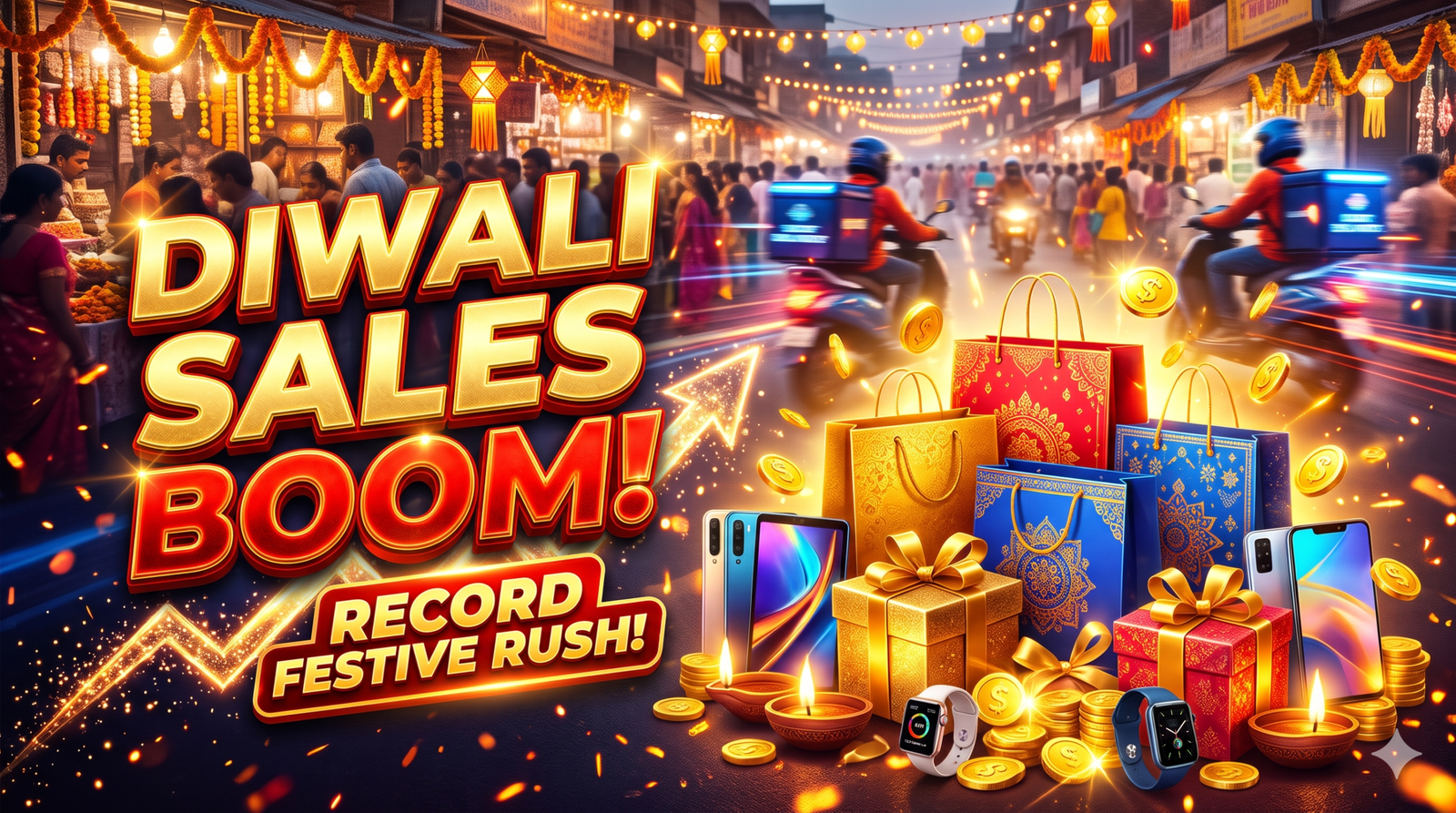
The Festival of Consumption: Comprehensive Review of the Diwali Festive Retail Season
Diwali has always served as the ultimate barometer of India’s consumer health, economic momentum, and retail sentiment. Spanning roughly four to six weeks from Navratri through Bhai Dooj, the festive window traditionally accounts for 30% to 40% of annual discretionary retail sales across major consumer categories. This season’s performance revealed a decisive structural shift in Indian consumption: an accelerating divergence between mass and premium demand, the relentless expansion of quick commerce into high-value festive gifting, and a resilient blend of digital discovery with experiential brick-and-mortar footfall.
1. Macroeconomic Backdrop and Consumer Sentiment
Entering the festive period, retail brands faced a complex macroeconomic environment. While urban middle-class budgets were partially constrained by persistent food inflation and rising living costs, rural recovery and favorable monsoon patterns provided strong purchasing power across agrarian hubs.
Rather than dampening overall expenditure, consumer behavior reflected a clear trend of “intentional consumption.” Shoppers actively trimmed routine discretionary spending in late summer to build financial buffers specifically for festive discounts, gold accumulation, home renovation, and big-ticket tech purchases.
A defining characteristic was the expansion of retail credit. The pervasive availability of:
- Zero-cost Equated Monthly Installments (EMIs)
- Non-banking financial company (NBFC) merchant promotions
- “Buy Now, Pay Later” (BNPL) schemes on UPI interfaces
democratized access to higher-priced goods, effectively pulling forward consumer upgrades across smartphones, premium appliances, and fine jewelry.
2. Category-Wise Performance Analysis
┌────────────────────────────────────────────────────────┐
│         FESTIVE RETAIL SECTOR SNAPSHOT                │
├─────────────────────────┬──────────────────────────────┤
│ Consumer Electronics    │ Premiumization (OLED, 5G)    │
│ Quick Commerce          │ 120–150% YoY surge in GMV    │
│ Gold & Fine Jewelry     │ Record volume despite spikes │
│ Fashion & Apparel       │ Ethnic wear outpaces western │
│ Auto (2W & 4W)          │ Strong rural 2W; SUV-led 4W  │
└─────────────────────────┴──────────────────────────────┘
Consumer Electronics & Home Appliances
The consumer electronics segment solidified its shift from volume-driven discounts to value-driven premiumization. Entry-level smartphone segments experienced modest growth, but upper-tier categories (smartphones priced above ₹30,000 and laptops above ₹50,000) saw robust double-digit volume expansion.
In home appliances, large-capacity frost-free refrigerators, smart front-load washing machines, and large-screen 4K/OLED televisions drove the bulk of gross merchandise value (GMV). Notably, ambient wellness appliances—including smart air purifiers, robotic vacuum cleaners, and premium air fryers—surged ahead of post-Diwali air quality concerns.
Gold, Silver, and Precious Jewelry
Despite elevated spot gold prices leading up to Dhanteras and Diwali, customer sentiment remained resilient. While lower-income brackets downscaled the grammage of physical jewelry purchases, lightweight contemporary daily-wear diamond jewelry, certified bullion bars, and digital gold savings programs experienced high transaction velocity. Silver also emerged as an outperforming asset class, recording elevated volumes in the form of traditional coins, silver dinnerware, and ornamental idols.
Fashion, Apparel, and Beauty
Fashion retailers witnessed high-density footfall, particularly during the final ten-day countdown to Diwali. Ethnic wear brands recorded strong sell-through rates, buoyed by the alignment of the festival with the impending winter wedding season. Direct-to-Consumer (D2C) beauty, personal care, and fragrance brands experienced record basket sizes, driven by curated festive gift hampers, skin-prep regimens, and influencer-led visual campaigns.
Automobiles: Two-Wheelers and SUVs
Automotive retail exhibited distinct regional dynamics. Two-wheeler registrations surged across Tier-2 and Tier-3 rural pockets, supported by healthy harvest expectations and attractive low-down-payment dealer promotions. In the passenger vehicle segment, consumer appetite gravitated heavily toward compact and mid-size SUVs, while entry-level hatchback sales remained relatively flat.
3. Channel Dynamics: E-Commerce, Quick Commerce, and Offline Retail
The classic tension between offline brick-and-mortar storefronts and online marketplaces reached a mature equilibrium this festive cycle.
The Rise of Quick Commerce in Festive Gifting
The standout disruptor of the season was the hyper-acceleration of quick-commerce platforms (Blinkit, Zepto, Swiggy Instamart). Once confined to milk, groceries, and staples, 10-to-15-minute delivery platforms successfully expanded into core festive categories:
- Gold and silver coins on Dhanteras morning
- Consumer electronics (smartwatches, earbuds, gaming consoles)
- Traditional sweets (mithai boxes), premium dry fruits, and gourmet gift hampers
- Puja essentials, earthen diyas, brass lamps, and festive home décor
By removing the friction of holiday traffic and long checkout queues, quick commerce captured spontaneous, last-minute gifting budgets that traditionally belonged to neighborhood gift shops.
Traditional E-Commerce vs. Omnichannel Brick-and-Mortar
Mainstream horizontal marketplaces (Amazon Great Indian Festival, Flipkart Big Billion Days) maintained absolute dominance in heavy logistics categories—including large televisions, furniture, and heavy kitchen appliances—leveraging tiered delivery slots, trade-in exchange bonuses, and extended warranty bundles.
Concurrently, offline department stores and high-street malls witnessed record weekend footfall. Retailers that invested in omnichannel fulfillment—allowing shoppers to research and reserve online before trying in-store—benefited from higher in-store conversion rates and superior basket sizes compared to purely transactional online shopping.
4. The Rural vs. Urban Divide and Premiumization
A central narrative of the festive season was the growing bifurcation of consumer spending:
- The Premiumization Wave: Across both Tier-1 metros and regional state capitals, consumers showed an unambiguous willingness to spend extra for design, durability, energy efficiency, and brand prestige. High-end coffee machines, premium leather goods, and high-spec electronics easily outpaced budget alternatives.
- K-Shaped Recovery Signals: The lower-tier mass market exhibited measured caution. While festive promotions provided a noticeable uplift, price-sensitive consumers remained hyper-selective, heavily weighing deep discounts, cashback incentives, and utility-first products.
5. Strategic Takeaways for Brands and Retailers
The lessons drawn from this festive performance offer a roadmap for retail planning into the coming fiscal year:
- Inventory and Hyperlocal Staging: Brands can no longer rely solely on centralized regional distribution centers. Inventory must be decentralized across urban micro-warehouses (dark stores) to satisfy immediate on-demand festive shopping windows.
- Financing as a Conversion Engine: Flexible credit solutions have evolved from a checkout convenience into the primary driver of high-ticket category adoption. Co-branded credit card promotions and zero-down-payment plans are now vital marketing levers.
- Experiential Retail Matters: As online platforms commoditize transactional purchasing, brick-and-mortar stores must double down on immersive visual merchandising, personal styling, and hospitality to justify physical store visits.
Conclusion
The Diwali festive season reaffirmed the resilience of India’s domestic consumption story. While spending patterns highlighted an increasingly discerning, value-conscious, and credit-empowered consumer base, total retail turnover across online and physical channels demonstrated sustained economic vitality. For businesses, the season made one fact clear: success in modern Indian retail no longer relies on blanket discounting, but on speed, premium value propositions, and seamless cross-channel accessibility.
Would you like to narrow this review down to a specific industry (such as smartphones, FMCG, or auto), or generate high-impact titles, SEO keywords, or thumbnail concepts for this piece?