Here is an in-depth breakdown covering public transit impacts, major city updates, and the political background driving the ongoing protests across France:
1. Public Transport Disruptions & Travel Advisory
- Paris (Île-de-France / RATP):
- Metro Closures: Preemptive closures and route diversions have affected over 20 metro stations, especially along the central demonstration axis between Porte d’Italie and Porte de Vincennes, as well as interchange hubs near Place d’Italie, Bastille, and Nation.
- Buses & Trams: Tramway lines (T3a, T3b) running along the southern and eastern boulevards face localized suspensions. Surface bus routes crossing the march perimeter have been rerouted or terminated short.
- National Rail (SNCF):
- Intercity TGV and TER regional train services face scattered delays and cancellations due to strike notices filed by railway union branches in solidarity with student and civil-service federations.
- Aviation:
- Paris airports (Charles de Gaulle and Orly) have reported intermittent air-traffic control and ground-handling delays. Passengers are advised to check airline statuses before traveling to terminals.
2. City-by-City Situation
- Paris:
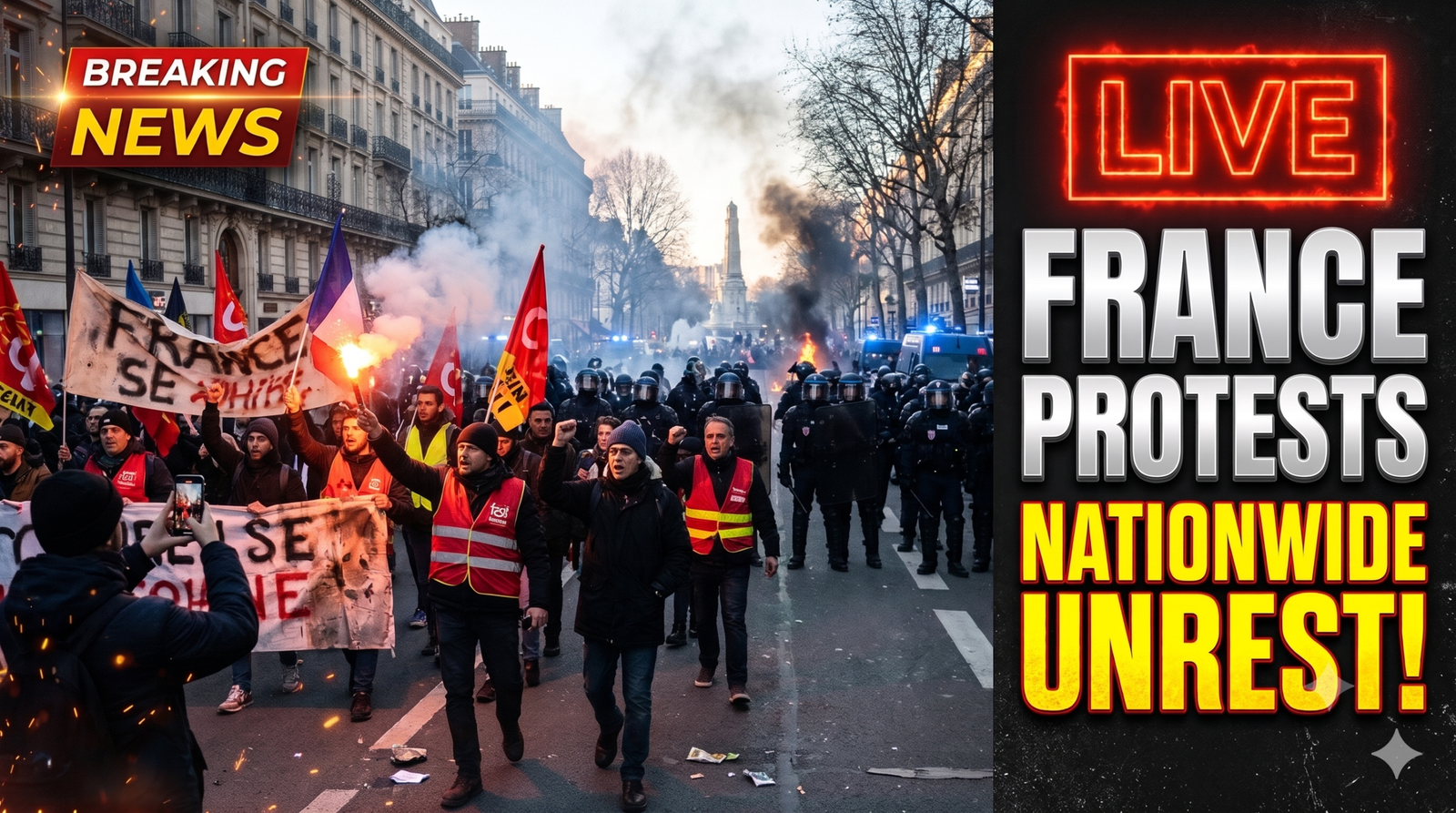
- The main union march departed with heavy security cordons. Tension flared along peripheral avenues where small splinter groups set fire to refuse bins and construction barriers, met by targeted tear gas and dispersion charges from police.
- Lyon:
- Unauthorized gatherings formed around Place Bellecour and Guillotière. Police deployed water cannons and tear gas after projectile throwing was reported near administrative offices.
- Marseille & Toulouse:
- Tens of thousands joined peaceful marches demanding emergency funding for coastal and regional schools. Port workers in Marseille held symbolic walkouts, slowing freight processing.
- Lille & Nantes:
- University campuses and several high schools saw temporary blockades (“blocus”), with student committees joining union workers at regional prefecture squares.
3. Political Background & Key Grievances
- School Infrastructure & Education Crisis:
- The movement was initially catalyzed by secondary school and university unions protesting deteriorating school buildings (heating failures, asbestos concerns, overcrowding) and severe shortages of teaching staff.
- Cost of Living & Purchasing Power:
- Major trade unions (CGT, CFDT, Solidaires, FSU) expanded the mandate to address broader economic pressures, including high energy tariffs, food price inflation, and wage stagnation across both public and private sectors.
- Government Pressure:
- The protests have escalated political pressure on President Emmanuel Macron’s administration and the Prime Minister’s cabinet. Left-wing opposition parties (notably La France Insoumise) have rallied behind the demonstrators, warning of rolling strikes if emergency budgetary allocations are not presented to Parliament.